


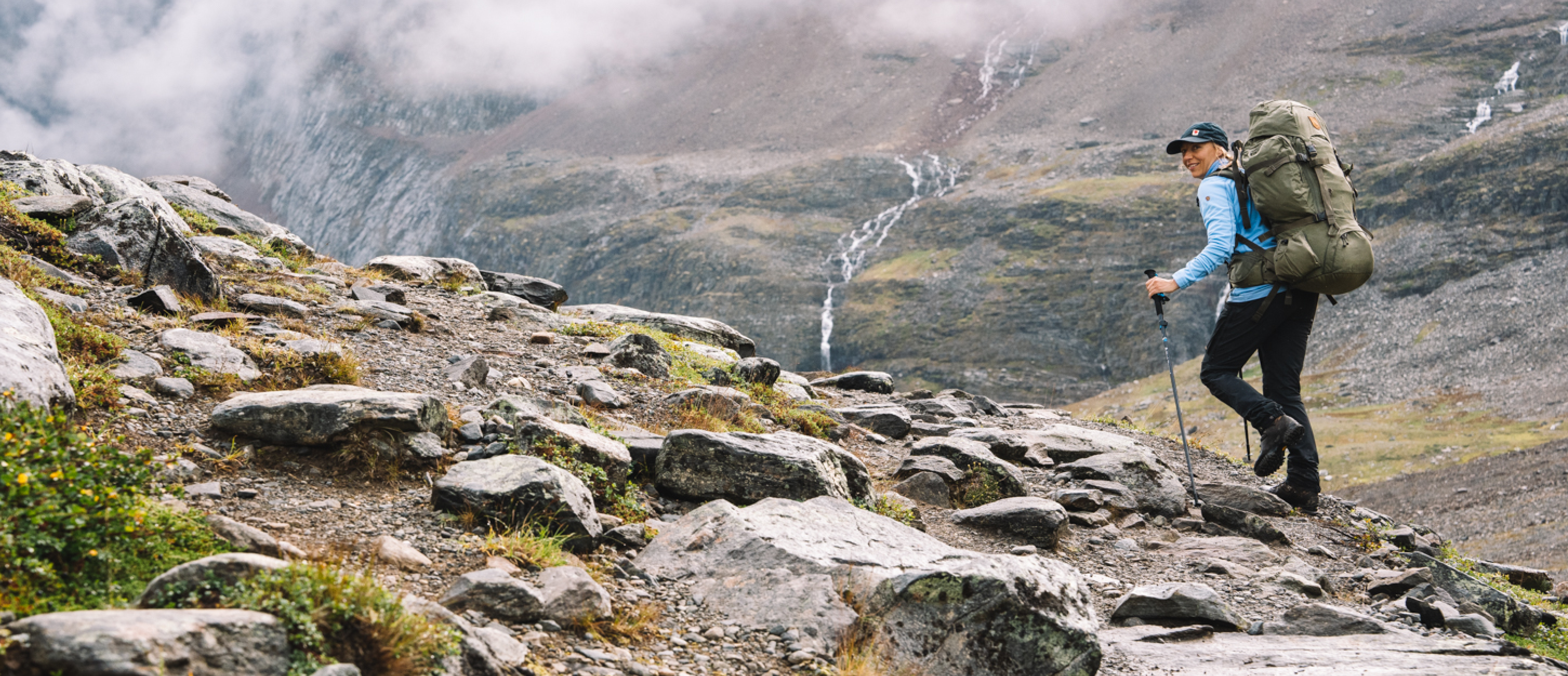
Fjällräven Classic
Everything you wanted to know about multi-day trekking (but were afraid to ask)
For many participants, Fjällräven Classic is more than a trek. It’s a learning experience. Along the trail, you pick up skills that build confidence and comfort outdoors, like how to pack smart, eat well, and care for yourself and nature.
But, what about the ‘awkward bits’? Like what to do when nature calls, or how to handle illness on the trail. Fjällräven Friend Sofia Johansson is here to get into the fundamentals.
Question: Let’s get straight to it. How do you…well…poop in nature?
Sofia: Here in Sweden, the golden rule is to find a spot well away from the trail and off course from any water source. Then, dig a small hole, do your business, cover the hole and put your used toilet paper in your trash bag. I have a ‘toilet bag’ which keeps my toilet paper, hand sanitiser, and a small towel or wet wipes together. Once you’ve pooped outside the first time, you’ll learn it’s no big deal. Just a part of trail life.
Every Fjällräven Classic has its own ‘rules’ about where and how to go to the toilet, so check local guidelines.
Question: Generally, how do you manage personal hygiene on the trail?
Sofia: It’s all about maintaining your normal routine, only modified for the outdoors. For example, you wash your hands before cooking and clean yourself up before bed, right? Just do that with hand sanitiser, wet wipes, and a small towel.
On the trail, small things like a basic hygiene routine go a long way. Even a rinse in a stream can feel like a luxury. Just remember to carry out what you bring into nature. Wet wipes, tampons, pads, and toilet paper should all be put into your trash bag and disposed of when you finish your trek.
Question: I’ll have my period during a trek; what should I do?
Sofia: I think the most important part is to use the same method in nature you feel comfortable with at home! I like using a menstrual cup, because I can easily clean it with water and intimate wash and use it again rather than having to store used tampons in my trash bag until the end of a trek. Check out what I have to say about menstruation on the trail on Instagram.
Question: How can I be a little more comfortable sleeping in a tent?
Sofia: Make sure your body is warm before getting into the tent and your sleeping bag. Do some jumping jacks or end-of-the-day chores. I like to prepare for my morning routine. I boil water for a hot water bottle that I keep in my sleeping bag for warmth. In the morning, I start by drinking that body-temperature water to get hydrated. I also put together everything I need for breakfast before turning in, so that I can easily make a coffee and meal and get going after waking up.
Do whatever you need to get your body temperature up. Just do not be tempted to put on extra layers of clothing, because your sleeping bag needs your body heat to create a warm environment.
Also, earplugs. You’ll sleep more soundly when you don’t hear unfamiliar outdoor noises or your tentmate.
Question: What happens if I get sick on the trail?
Sofia: First off, prevention is key. Practice good personal hygiene, treat water from natural sources, and avoid sharing food or utensils. Before you head out, let your trekking companions know where you keep your first aid kit.
To treat common issues like an upset stomach, and cold- or flu-like symptoms, I ensure my first aid kit includes pain and anti-diarrhoea medication, antacid tablets, throat lozenges, rehydration salts, and glucose tablets. Rest and keep yourself hydrated and nourished.
Finally, let other trekkers know you’re unwell. Not only is this common courtesy, but they can also monitor your wellbeing and step in if your condition worsens.
Question: Do I have to eat freeze-dried food every day?
Sofia: Freeze-dried meals are popular for multi-day treks because they’re an easy way to stay nourished on the trail without adding lots of bulk to your pack.
But food is morale, so I always pack a few extras to ‘spice’ up my meals. Sprinkle some salt, chilli flakes, dried herbs, nuts, and parmesan cheese on your meal, and it’s instantly yours! I also like bringing flour tortillas. Wrap your food up in that, and Voila! you’ve got yourself a burrito.
Question:What is the one thing you never leave at home for a trek?
Sofia: I bring an old linen kitchen towel, which allows me to maintain good hygiene on the go. One of my break routines is putting my feet in cold water. It prevents swelling and blisters. Before I put my socks and boots back on, I dry my feet thoroughly with the towel. It’s linen and dries quickly, so it won’t get stinky.
Question: Finally, how many pairs of underwear do I pack for a multi-day trek?
Sofia: For any trek up to about six days, I bring two pairs. I wear one pair and have the other pair in my backpack. It’s important to have a system where you always have one dry pair of underwear. Of course, if you end up with only wet underwear, you can always wear your long underwear on its own. The only exception to this ‘rule’ of two pairs of underwear is if I’m having my period, in which case I’ll bring three pairs.
Two pairs of underwear may seem like too few, but it’s nice to know that I’ll use everything I’ve packed. Using what you have is the sign of a well-planned trek, and the beauty of multi-day trekking.
Published December 2025
Posted In
Share


