


Adventures
Reading Time 6 Minutes
For the love of skiing
In the village of Berga in Sälen. Sweden, 16,000 skiers wait at a starting line. Anticipation, suspense, and excitement hang in the air. Someone straightens their number bib one last time, while another adjusts their hat. Hydration belts are on, coveralls are off, and eyes meet in mutual understanding – the ski trip to Mora today will be no picnic.
Behind the number bib the skiers wear are countless hours of training. The weather is against them though, with wet trails and rain on the horizon. But none of that matters because here they are now, at the start of the 100th Vasaloppet, the biggest cross-country ski race in the world.
The starting shot sounds and, like a gigantic slithering snake, the skiers set off on the ninety-kilometre race. Those leading this huge mass of skiers are the elite, who are world leaders in cross-country skiing. They quickly leave the rest of the participants behind with their powerful pole strokes. The cross-country cup they are competing for is called Ski Classics and is made up of 15 Pro Tour events held across Europe. Instead of competing in national teams, skiers compete in their own chosen teams, just like in road cycling.
‘We’ll set this tent up over by the lorry’, says Roxane Lacroix, Event Supervisor for Ski Classics.
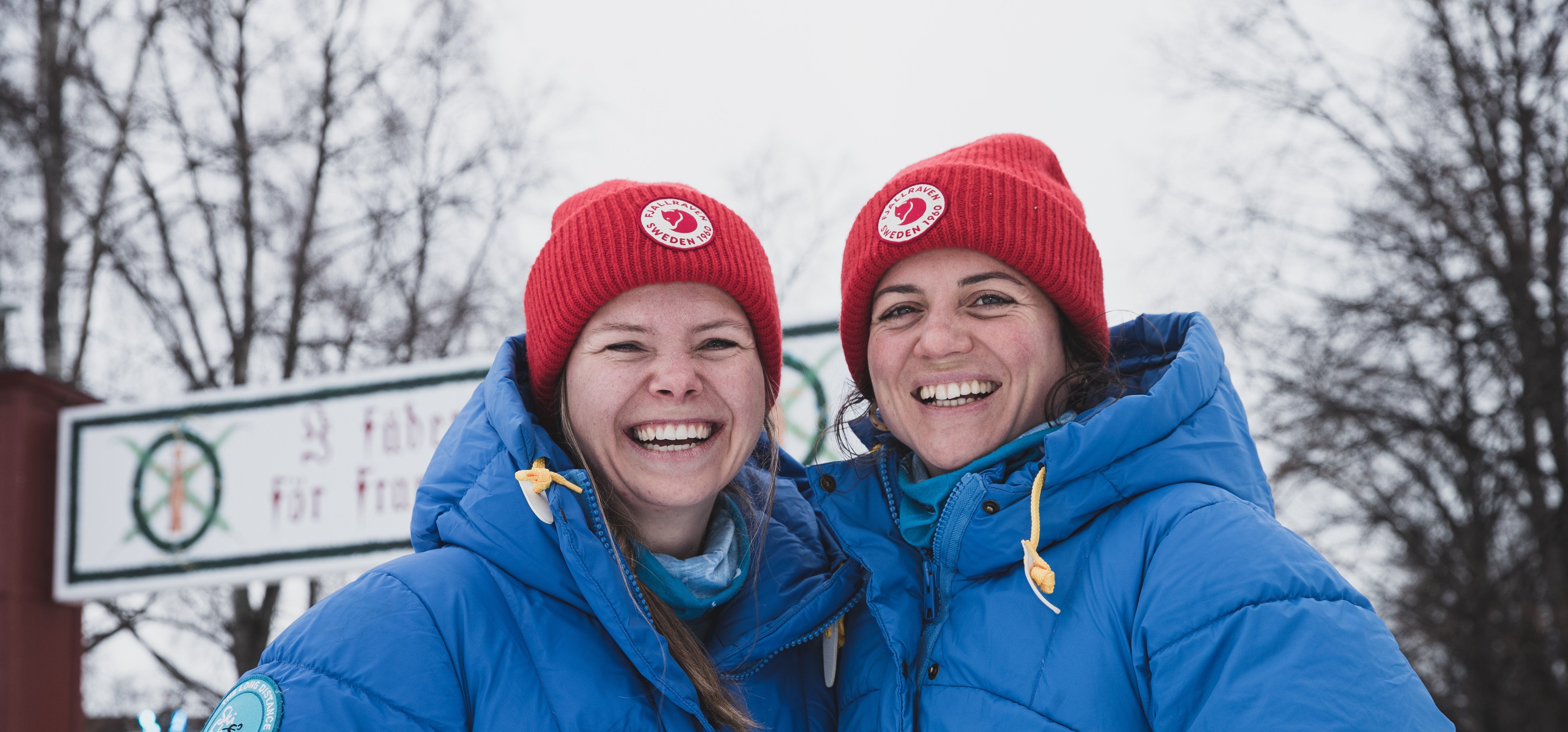
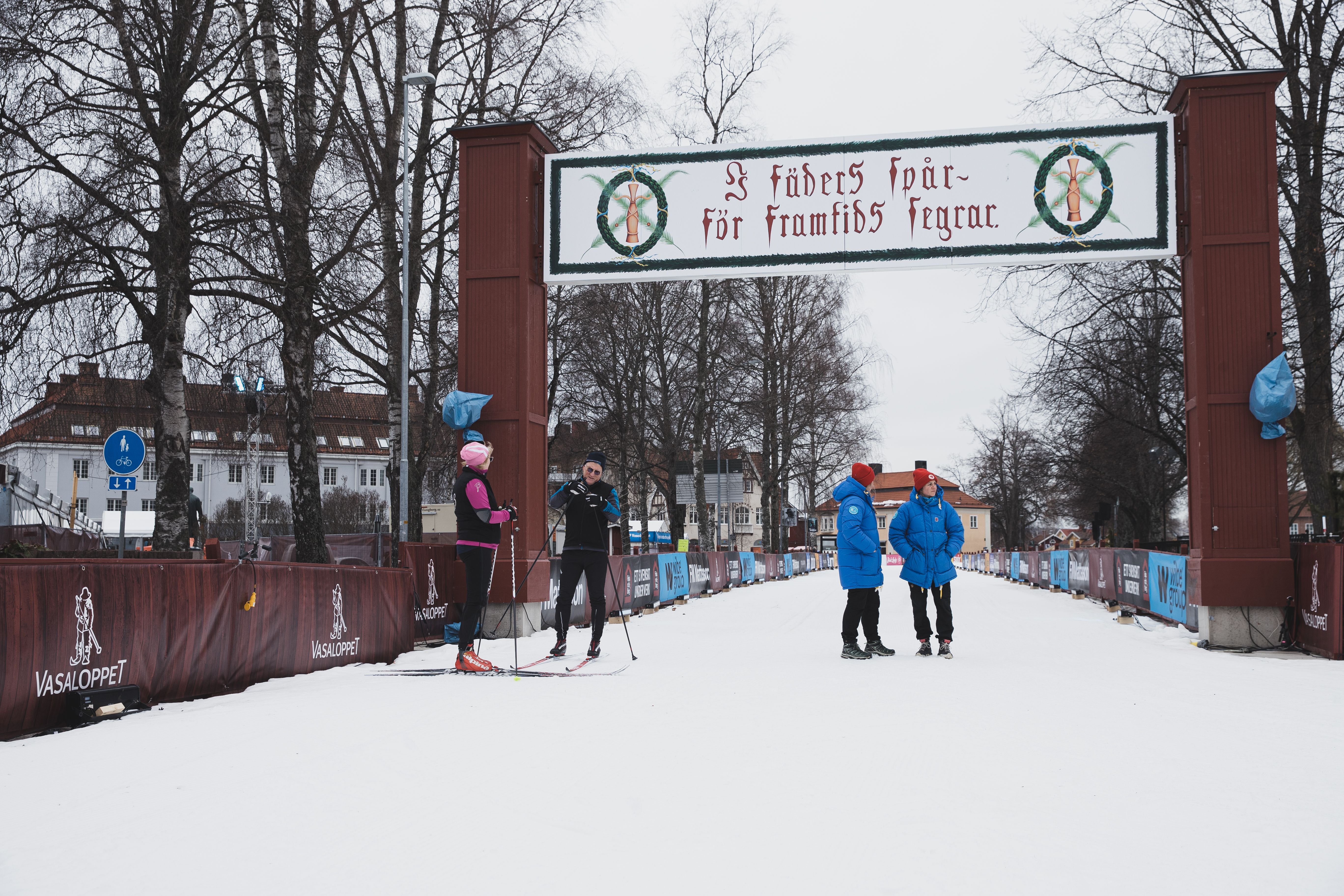
Vasaloppet is three days away and Roxane, alongside her colleague Theresa Fugger, is near the finish line which declares the well-known motto ‘In the tracks of our forefathers for future victories.’ Theresa and Roxane work for W sportsmedia, which runs the Ski Classics cross-country cup. Upon their arrival at the competition venues around Europe, they have set tasks. Today it’s to unload the lorry. Marketing materials, flags, and assorted equipment are unloaded and stored under a tent. Theresa, originally from Austria but now living in Helsingborg, is responsible for communication with the 35 Ski Classic Pro Teams and for synchronisation between Ski Classics, the Pro Teams, and the local events. She is also the official FIS (International Ski and Snowboard Federation) Equipment Controller and, along with her colleagues, responsible for how Ski Classics carries out fluor testing.
‘My role at Ski Classics is Event Supervisor’, says Roxane, who is from France. ‘I make sure that the Ski Classic brand specifications are observed at each event and that the start, sprint, climb and finish lines look good on TV. I work with the local organiser of each event to set up the start area and the mixed zone at the finish line. I liaise with the sound producer and the announcer at the start and finish. I’m also in charge of the flower ceremony at the end.’
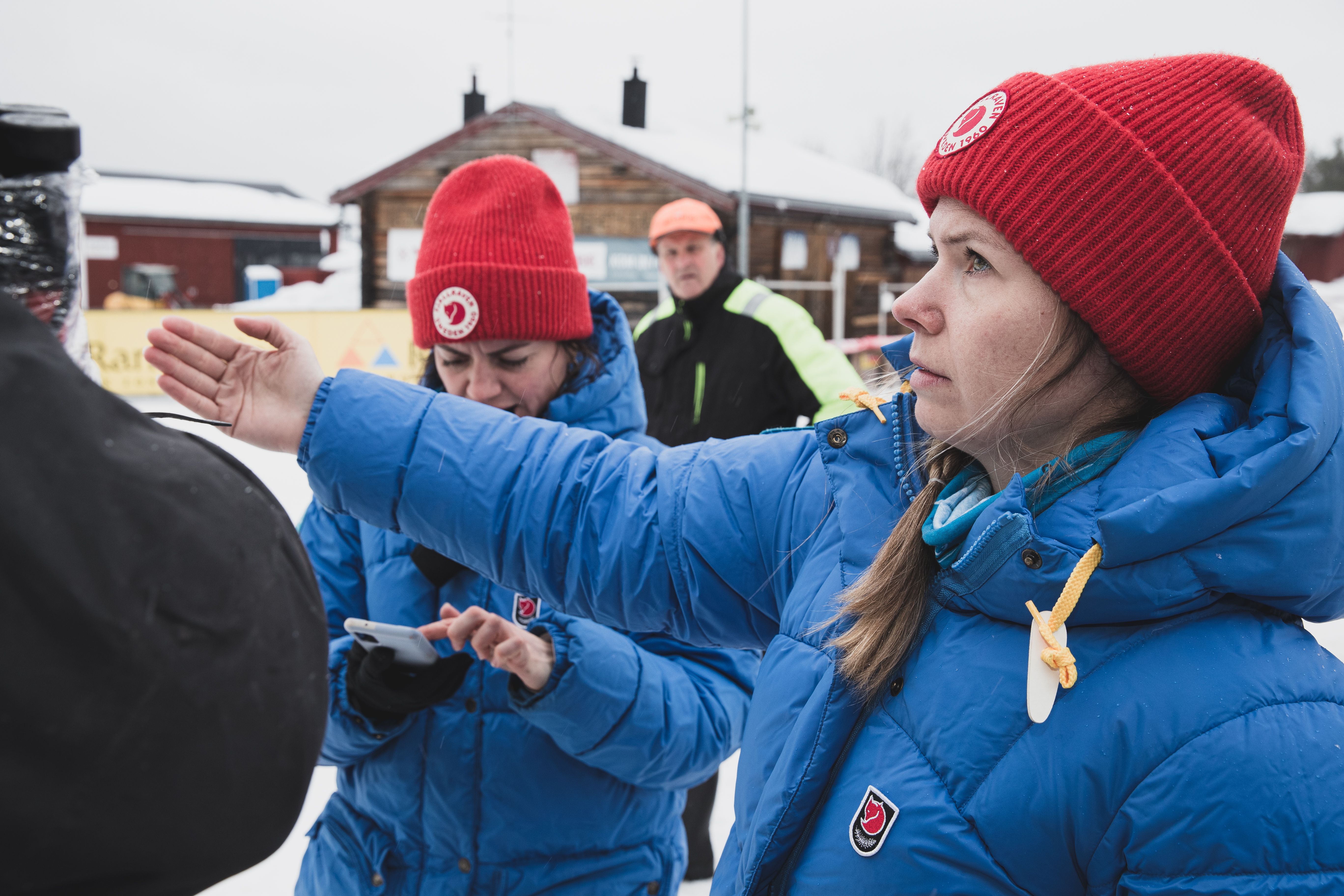
They get in the lorry and head towards Oxberg. All locations along the ski course will be checked today, and marketing material will be displayed. For the elite competing in the cup, there are races within the race – zones where the first man and woman win sprint prizes. Evertsberg is one of the sprint locations, and Roxane instructs the organisers on how to set up the flags and sprint portals for optimal visibility on TV broadcasts.
‘This is good,’ says Theresa as she surveys the set-up and skilfully throws an iron rod over her head and carries it away.
To know what Vasaloppet is today, we need to go back a few hundred years to the 16th century. The future king of Sweden, Gustav Vasa,has fled Stockholm from Christian II of Denmark. Gustav seeks support in the villages of Dalarna but is met with resistance at first. When the Dala people learn of King Christian's intentions to raise taxes however, they send out a band of men on skis to bring Gustav back. They catch up with him and he follows them back to Mora, where he takes on the challenge of leading the rebellion against the occupying forces. Four hundred years later, a ski race was established in honour of Gustav Vasa – and so Vasaloppet was born.
A lot has changed since the first Vasaloppet a hundred years ago. Today, there are groomed trails and tarred wooden skis are a thing of the past. Today's skiers use narrow plastic skis that either have skins underneath, are waxed with grip wax, or are left bare and free of wax. In fact, the elite in Ski Classics have almost completely replaced the more traditional diagonal stride technique with the double poling technique. With double poling, the skier uses their upper body and double pole skis to move forward. In 2013, Jörgen Aukland became the first man to win Vasaloppet without grip wax and one year later, Laila Kveli became the first woman to do the same. Most athletes in Vasaloppet still ski with skins, but the double poling technique with only glide wax under the skis is spreading rapidly even amongst them.
‘I work with my passion, skiing, on an international level’, says Theresa. ‘Being part of Ski Classics means being an important piece of the puzzle in creating the extraordinary racing experience that allows athletes to compete for a professional cup, while providing the fans with exciting live coverage. It’s a very fulfilling professional role.’
On race day, which for Vasaloppet is always the first Sunday in March, Theresa is the Floor Manager at the start. She makes sure everything runs smoothly before the race begins, presenting number bibs and coordinating with media production to ensure the timeline is followed until the starting gun sounds.
One hour before the start however, the race is dealt a blow asit’s pouring with rain.
‘Most Ski Classic events are competitions where both elite and recreational skiers take part together. The feeling of belonging created by the love of skiing is a beautiful thing to see’, says Roxane. ‘Conditions will be challenging this year, especially for the recreational skiers.’
The year’s Vasaloppet is indeed a struggle for many with difficult trails and drag, and even the elite are put to the test. Make no mistake, ninety kilometres is a long way to go on skis for participants of all levels. When Theresa and Roxane have finished the prize-giving and flower ceremony for the winners at the finish line in Mora, the fact is that most of the skiers who were at the same starting line in Berga are still struggling out on the trails. While the male winner, Torleif Syrstad finished the men’s race with a time of 3 hours 52 minutes, and the female winner, Emilie Fleten, completed the race in 4 hours 23 minutes, it was justas impressiveto see the final skier cross the finish line nine hours later. From first to last, they all race in the tracks of their forefathers – and foremothers – for future victories.
Published December 2024
Posted In
Tags
Share


Read More
Guides
Staying warm is just the beginning. Don’t let winter catch you out cold. When done correctly, with suitable gear and goals, hiking is rewarding at any time of year. Here are some tips to help you enjoy every step, in snow, frost, crunchy leaves or on weather-beaten trails, come rain, wind, snow and shine.
Read More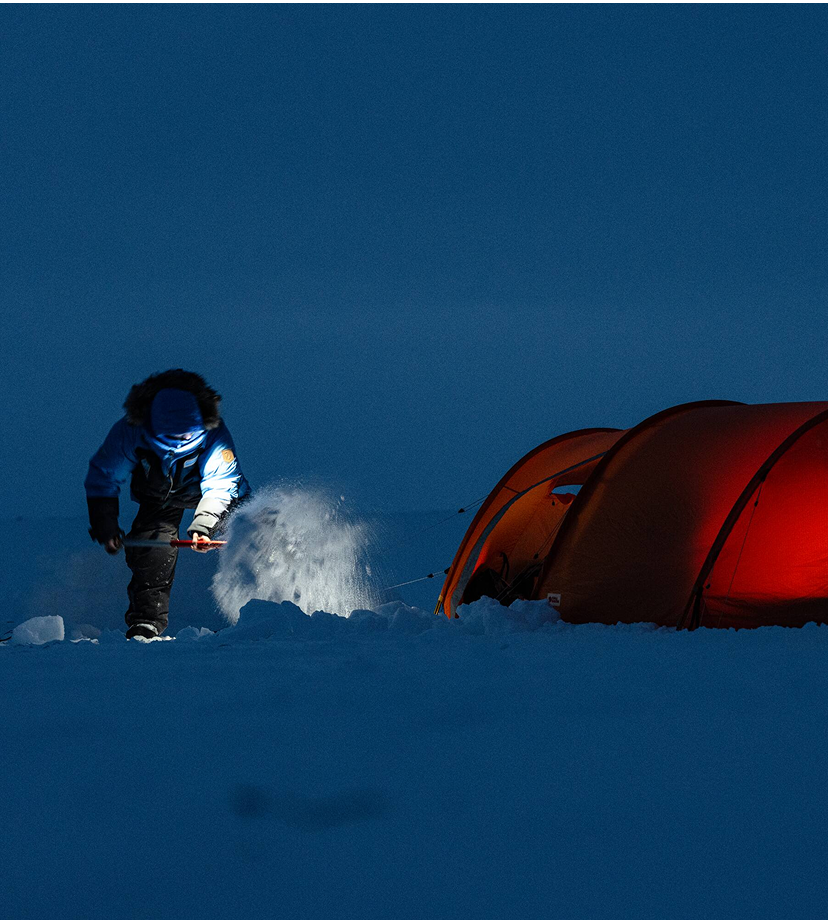
Fjällräven Polar
Reading Time 3 Minutes
The classic winter layering system consists of three to four layers of garments and provides the warmth and protection needed from the elements. But how does this system adapt to environments above the Arctic Circle?
Read More
People
Reading Time 2 Minutes
Karina lives in Innansjön in Västerbotten, northern Sweden, and manages Villa
Insikt, a company that focuses on helping people find their way to a healthier
everyday life. She is a trained nurse specialising in psychiatry, physiotherapy
and behavioral science. Nature’s positive effect on human health is the
foundation of her business. “Ever since I was […]
Read More