


Products
How to be comfortable in the mountains
With Head of Innovation Erik Blomberg
With Head of Innovation Erik Blomberg
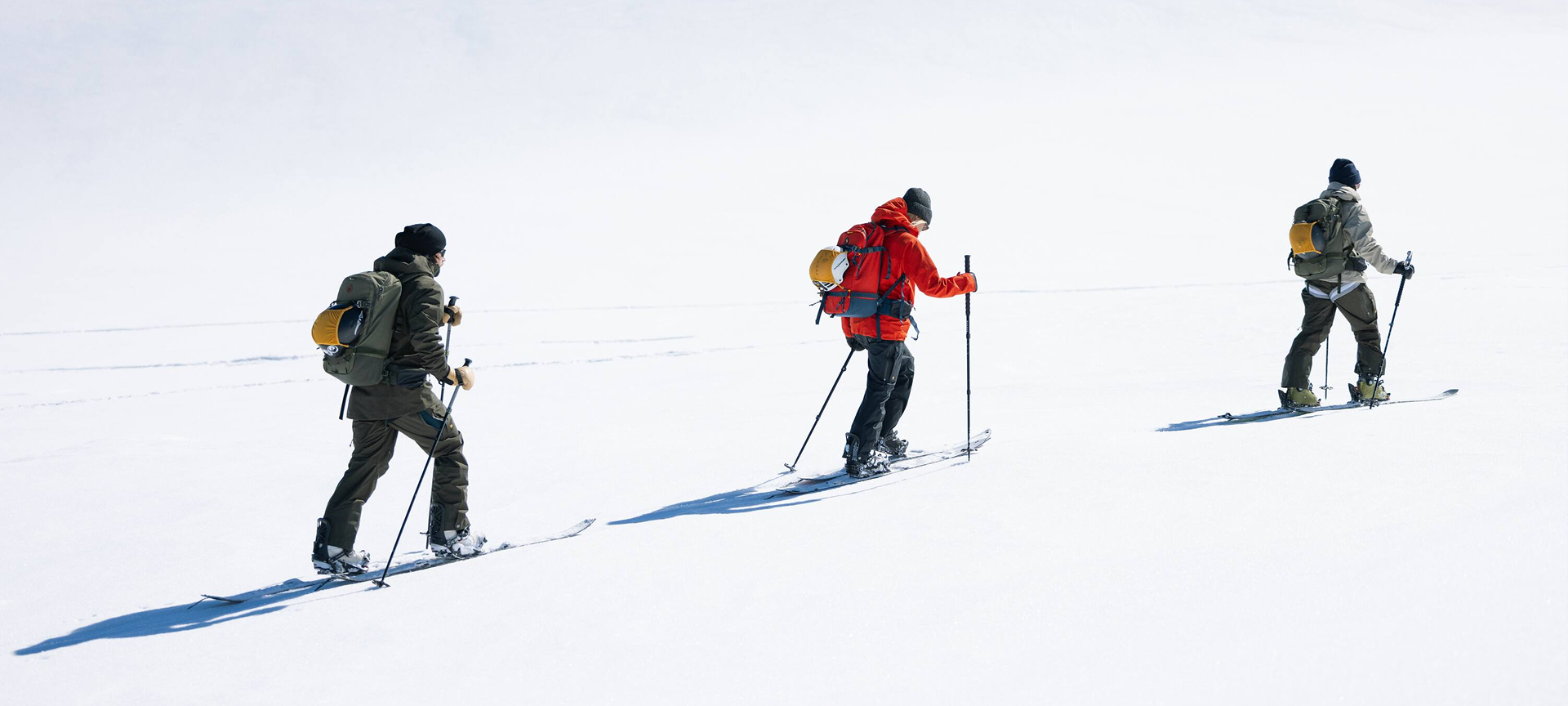
Endless views. Lungfuls of fresh air. Peaceful solitude. Adventure. There’s plenty of reasons to love the mountains, and when you’re there you don’t want sweat, body temperature, or the fit and functionality of your gear to take anything away from the experience. In fact, when you’re living life above the treeline, with its challenging terrain and changeable weather, comfort isn’t a luxury. It’s essential to your safety.
When uphill climbs heat you up, exposed descents cool you down, and every transition demands quick adjustments, outdoor experts like Fjällräven Head of Innovation Erik Blomberg recommend an active approach to layering. In short, adding and removing garments often throughout the day.
When uphill climbs heat you up, exposed descents cool you down, and every transition demands quick adjustments, outdoor experts like Fjällräven Head of Innovation Erik Blomberg recommend an active approach to layering. In short, adding and removing garments often throughout the day.
Question: What’s the key to staying comfortable when backcountry touring?
Erik: For me, comfort in the mountains comes down to staying dry and protected from the wind. Moisture – either from sweating or being exposed to wet weather – is the enemy, and wind strips away any warmth your body has generated.
Question: So, how do I protect myself from moisture, wind, and cold
Erik: When backcountry touring, I use an active approach to layering, adding and removing different layers on my upper body often. When I’m switching from intense uphill climbs that make me sweaty and windy descents that rapidly cool me down, I’ll adjust my tops on the go.
For the sake of both safety and efficiency, for my lower body, I’ll simply use the ventilation openings to release excess heat. And remember! The fly of your trousers can also be opened for ventilation!
Question: What do you look for in a base layer?
Erik: Worn closest to the skin, a base layer’s job is to help you regulate your body temperature. I opt for wool base layers by Devold or our Bergtagen mountain collection because wool also wicks away moisture. Staying as dry as possible during ascents is my top priority. Base layers are the foundation of a layering system and I combine mine with a mid layer in cold temperatures. On milder days, however, I will just wear a base layer and a light windbreaker jacket.
Question: What’s your pick for a mid layer: fleece, wool, insulation?
Erik: Each type of mid layer material has its purpose. What you select just needs to add a layer of warmth without trapping too much moisture.
Before I pack for a backcountry tour, I look at the forecasted weather and temperature. On warmer days where I might get sweaty, I’ll use a polyester fleece top, like the Abisko Lite Fleece. On colder days, I’ll use the Keb Fleece, which is a recycled polyester and traceable wool blend.
For the lower body, depending on the weather, I’ll either wear just a base layer, or a base layer plus 3/4-length fleece trousers, or base layer plus insulation shorts. If it’s really cold, I’ll wear all three.
Question: What kind of insulation garments do you pack for backcountry touring?
Erik: The insulation layer is all about trapping air and preserving heat. When backcountry touring, packable jackets with light down or synthetic padding are perfect. Depending on the air temperature the day I’m out, I’d use the Bergtagen 60 or 130 Insulation Jackets with their PrimaLoft® insulation made from recycled polyester, or a down jacket of some kind.
Whatever you select, it’s important to stay agile. While I wear my insulation layer during breaks, I take it off and pack it away as soon as I start moving again.
Question: How can you prevent wind from cooling you down?
Erik: I like to call wind a ‘heat thief’, because when it blows, your body must work a lot harder to create heat that the wind has stripped away. A windbreaker-style jacket protects you from this.
You need to find balance in the protection a wind layer provides, however, because the more windproof your jacket is, the less breathable it is. Depending on the stage of the backcountry tour and the temperature, I’ll switch between a very light jacket and something more robust.
Question: How do you use a shell layer when backcountry touring?
Erik: The truth about shell layers and backcountry touring is that you don’t often need full waterproof protection. Wearing shell garments when there’s no significant precipitation just increases the chance of sweating and cooling down from that. I usually pack a shell jacket and a windbreaker-style jacket and use the latter most often. The shell I save for storms and sudden weather changes. This is no problem, as many shell layers these days, like the Bergtagen GTX Touring Jacket made with GORE-TEX technology, are so light they’re easy to keep packed away for most of a mountain tour.
Question: Which outdoor accessories are essential in mountain environments?
Erik: I always pack a beanie, cap, neck gaiter, and wool socks. It’s not a bad idea to bring some different versions of your headwear and hand protection, either. You could always lose a cap or gloves in the wind.
For me, the combination of beanie and cap means I always have protection if I sweat in one. I just put on the other. Something simple like that makes a huge difference when you’re out.
A neck gaiter is also a very powerful temperature control tool. Wool socks keep my feet warm even when they’re damp, and I pack an extra pair for multi-day touring.
For my hands, I apply the same active layering approach as the rest of my body. I wear thin gloves when going uphill and doing tasks, and a slightly thicker pair for descents. I’ll pack a pair of shell mittens for stormy weather.
Question: What’s your ideal backpack for backcountry touring?
Erik: With active layering, it’s important to be able to access your clothing and gear easily while on the go. For backcountry touring, right now I’m using a Bergtagen Touring backpack. Aside from a spacious main compartment, it has a dedicated avalanche tool compartment and multiple pockets to store all your essentials.
Question: When choosing equipment for backcountry touring, what should people consider?
Erik: For touring skis, consider length, width, and weight. Lighter isn’t always better. It’s more important they match your ability and the terrain. Ski poles should be adjustable to suit changing gradients.
Ideally, your boots are for touring, making them appropriate for long ascents. They should be comfortable also to walk in. I also like to tape my heels before I set out on a backcountry tour to prevent blisters before they happen.
Tech bindings designed for touring are most effective, and frame or hybrid bindings will suit those who want a more ‘Alpine’ feel. Skins and crampons/ski knives are also essential for icy and steep terrain.
Though the mountains are my favourite place to be, the conditions there are often unpredictable. When backcountry touring, an avalanche kit with beacon, probe, and shovel is a must. Aside from layering for warmth, this is your most important piece of safety equipment.
Once you’ve got these essential items, plus an active layering strategy, I think you’re all set for life above the treeline. We’ll *cough* ski you out here soon!
Backcountry touring essentials
Erik: For me, comfort in the mountains comes down to staying dry and protected from the wind. Moisture – either from sweating or being exposed to wet weather – is the enemy, and wind strips away any warmth your body has generated.
Question: So, how do I protect myself from moisture, wind, and cold
Erik: When backcountry touring, I use an active approach to layering, adding and removing different layers on my upper body often. When I’m switching from intense uphill climbs that make me sweaty and windy descents that rapidly cool me down, I’ll adjust my tops on the go.
For the sake of both safety and efficiency, for my lower body, I’ll simply use the ventilation openings to release excess heat. And remember! The fly of your trousers can also be opened for ventilation!
Question: What do you look for in a base layer?
Erik: Worn closest to the skin, a base layer’s job is to help you regulate your body temperature. I opt for wool base layers by Devold or our Bergtagen mountain collection because wool also wicks away moisture. Staying as dry as possible during ascents is my top priority. Base layers are the foundation of a layering system and I combine mine with a mid layer in cold temperatures. On milder days, however, I will just wear a base layer and a light windbreaker jacket.
Question: What’s your pick for a mid layer: fleece, wool, insulation?
Erik: Each type of mid layer material has its purpose. What you select just needs to add a layer of warmth without trapping too much moisture.
Before I pack for a backcountry tour, I look at the forecasted weather and temperature. On warmer days where I might get sweaty, I’ll use a polyester fleece top, like the Abisko Lite Fleece. On colder days, I’ll use the Keb Fleece, which is a recycled polyester and traceable wool blend.
For the lower body, depending on the weather, I’ll either wear just a base layer, or a base layer plus 3/4-length fleece trousers, or base layer plus insulation shorts. If it’s really cold, I’ll wear all three.
Question: What kind of insulation garments do you pack for backcountry touring?
Erik: The insulation layer is all about trapping air and preserving heat. When backcountry touring, packable jackets with light down or synthetic padding are perfect. Depending on the air temperature the day I’m out, I’d use the Bergtagen 60 or 130 Insulation Jackets with their PrimaLoft® insulation made from recycled polyester, or a down jacket of some kind.
Whatever you select, it’s important to stay agile. While I wear my insulation layer during breaks, I take it off and pack it away as soon as I start moving again.
Question: How can you prevent wind from cooling you down?
Erik: I like to call wind a ‘heat thief’, because when it blows, your body must work a lot harder to create heat that the wind has stripped away. A windbreaker-style jacket protects you from this.
You need to find balance in the protection a wind layer provides, however, because the more windproof your jacket is, the less breathable it is. Depending on the stage of the backcountry tour and the temperature, I’ll switch between a very light jacket and something more robust.
Question: How do you use a shell layer when backcountry touring?
Erik: The truth about shell layers and backcountry touring is that you don’t often need full waterproof protection. Wearing shell garments when there’s no significant precipitation just increases the chance of sweating and cooling down from that. I usually pack a shell jacket and a windbreaker-style jacket and use the latter most often. The shell I save for storms and sudden weather changes. This is no problem, as many shell layers these days, like the Bergtagen GTX Touring Jacket made with GORE-TEX technology, are so light they’re easy to keep packed away for most of a mountain tour.
Question: Which outdoor accessories are essential in mountain environments?
Erik: I always pack a beanie, cap, neck gaiter, and wool socks. It’s not a bad idea to bring some different versions of your headwear and hand protection, either. You could always lose a cap or gloves in the wind.
For me, the combination of beanie and cap means I always have protection if I sweat in one. I just put on the other. Something simple like that makes a huge difference when you’re out.
A neck gaiter is also a very powerful temperature control tool. Wool socks keep my feet warm even when they’re damp, and I pack an extra pair for multi-day touring.
For my hands, I apply the same active layering approach as the rest of my body. I wear thin gloves when going uphill and doing tasks, and a slightly thicker pair for descents. I’ll pack a pair of shell mittens for stormy weather.
Question: What’s your ideal backpack for backcountry touring?
Erik: With active layering, it’s important to be able to access your clothing and gear easily while on the go. For backcountry touring, right now I’m using a Bergtagen Touring backpack. Aside from a spacious main compartment, it has a dedicated avalanche tool compartment and multiple pockets to store all your essentials.
Question: When choosing equipment for backcountry touring, what should people consider?
Erik: For touring skis, consider length, width, and weight. Lighter isn’t always better. It’s more important they match your ability and the terrain. Ski poles should be adjustable to suit changing gradients.
Ideally, your boots are for touring, making them appropriate for long ascents. They should be comfortable also to walk in. I also like to tape my heels before I set out on a backcountry tour to prevent blisters before they happen.
Tech bindings designed for touring are most effective, and frame or hybrid bindings will suit those who want a more ‘Alpine’ feel. Skins and crampons/ski knives are also essential for icy and steep terrain.
Though the mountains are my favourite place to be, the conditions there are often unpredictable. When backcountry touring, an avalanche kit with beacon, probe, and shovel is a must. Aside from layering for warmth, this is your most important piece of safety equipment.
Once you’ve got these essential items, plus an active layering strategy, I think you’re all set for life above the treeline. We’ll *cough* ski you out here soon!
Backcountry touring essentials
- Touring skis, snowboard, or splitboard
- Touring boots and bindings
- Touring poles
- Climbing skins
- Ski knives/crampons
- Helmet
- Goggles
- Alpine ice axe
- Safety equipment (shovel, avalanche beacon, probe, harness, first aid kit)
- Repair kit (knife, pliers, duct tape, thin cord, steel wire)
- Map plus compass and GPS (including spare batteries and/or power bank)
- Insulated water bottle
- Thermos
- Wind sack
- Backpack suitable for backcountry touring
- 2X merino wool base layer tops
- Merino wool base layer bottoms
- Fleece or wool blend mid layer top
- Windbreaker jacket
- Light insulation jacket
- 3/4 length fleece trousers
- Insulation shorts
- Shell jacket
- Beanie
- Cap
- Neck gaiter
- 3X gloves (thin, working gloves, shell mittens)
- 2X wool socks
- Sunglasses
- Sunscreen
Posted January 2026
Posted In
Share


