


Nature
Reading Time 5 Minutes
Counting lice on an Arctic Fox may not seem glamourous, but it’s potentially vital to their future and was done for the first time in 2023 by M.Sc Student Anna Henriksson.
Returning to Tromsø from fieldwork required some adjustment to reacclimate to normal routines. The eternal daylight in Svalbard had turned my sleep schedule into a guessing game. Is it3AM or 3PM? Who could tell? The sun was ever present, and I lost track of time. However, back in Tromsø, I quickly readjusted to sleeping at night again.
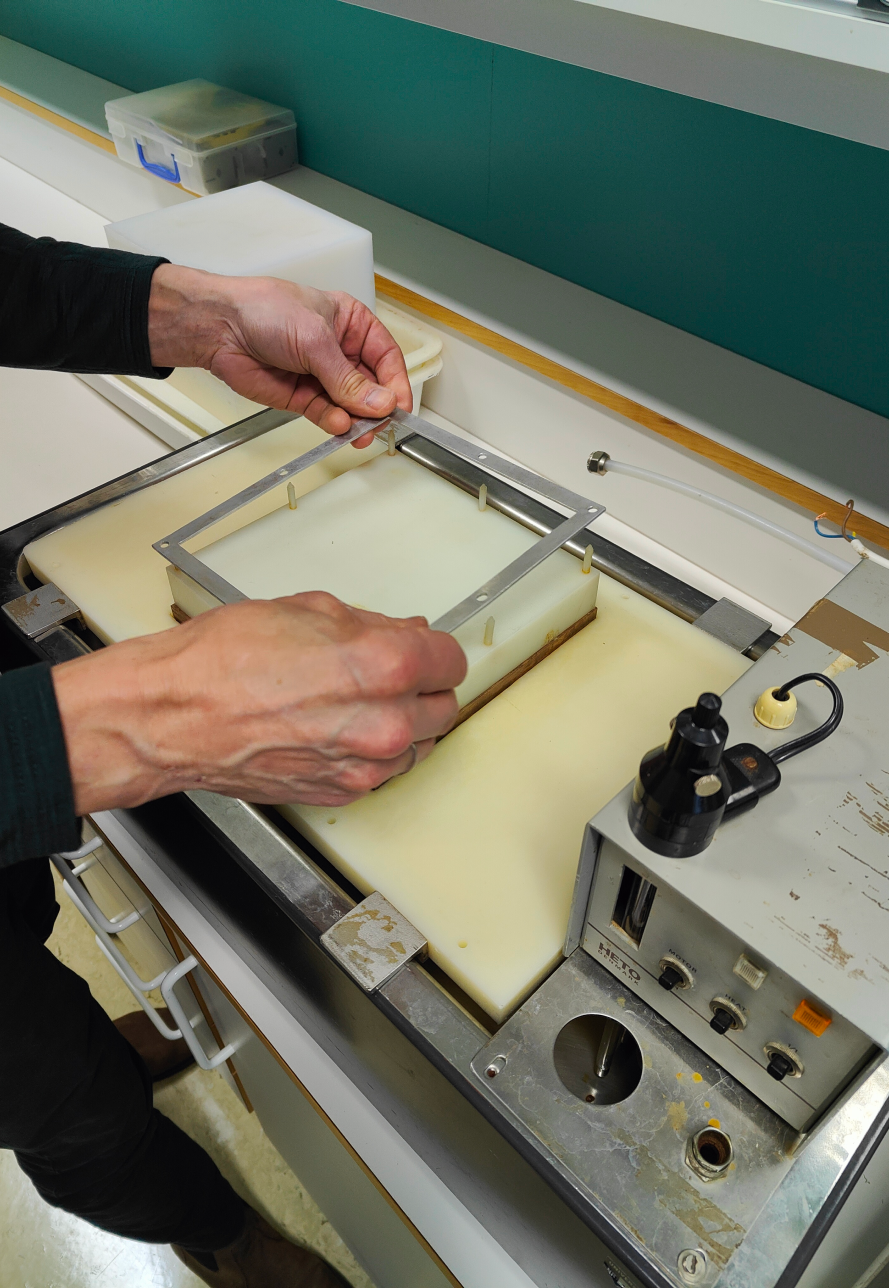
Returning home brought contentment that my fieldwork had gone as planned, even though the toughest part still lay ahead: organising and executing an extensive programme of laboratory work. Approval of my procedures by my supervisors marked the beginning of a labour-intensive summer, with days spent documenting and preparing fur samples before running experiments lasting over 10 hours per sample. Despite these challenges, it was a valuable learning experience, and it gave me plenty of time to refresh my memory and read up on the topic.
After a few months of intense laboratory and office work I had one final adventure left: a quick return to Svalbard!
Returning home brought contentment that my fieldwork had gone as planned, even though the toughest part still lay ahead: organising and executing an extensive programme of laboratory work. Approval of my procedures by my supervisors marked the beginning of a labour-intensive summer, with days spent documenting and preparing fur samples before running experiments lasting over 10 hours per sample. Despite these challenges, it was a valuable learning experience, and it gave me plenty of time to refresh my memory and read up on the topic.
After a few months of intense laboratory and office work I had one final adventure left: a quick return to Svalbard!
July: Collecting the field equipment
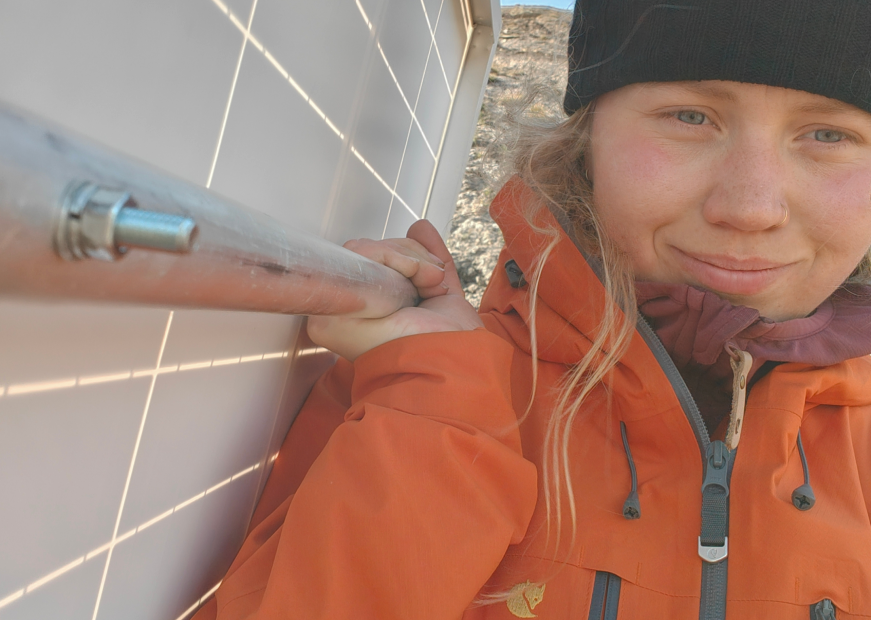
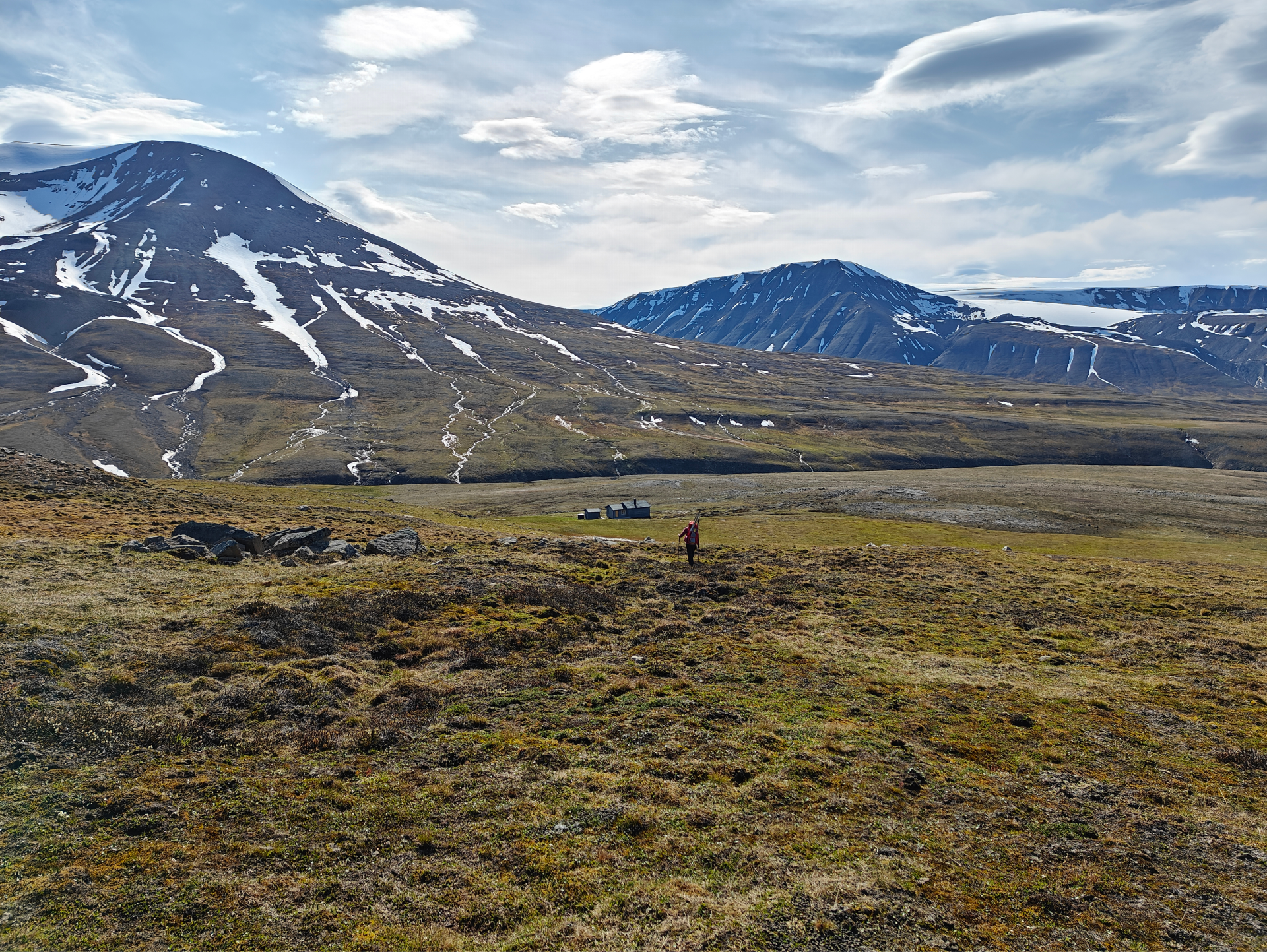
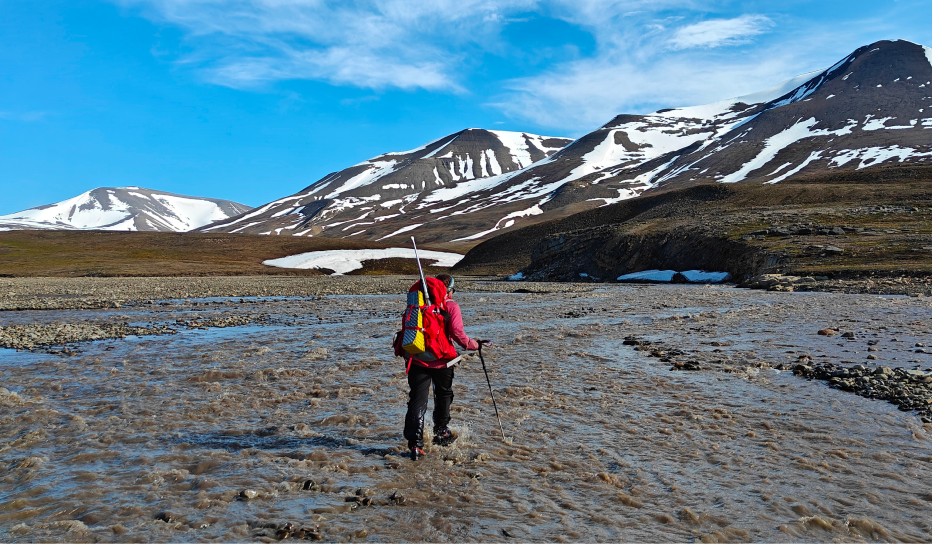
In early July I returned to Svalbard for a few days to retrieve the equipment and materials we had installed earlier in spring, and to collect the data! Arriving in Longyearbyen was like entering a Western movie, the town felt empty and quiet. Strong winds swept the streets clean, leaving a gritty crunch between your teeth no matter how hard you tried to avoid it.My field helper and guide, Martine, and I had a long walk ahead of us. The landscape over which we had so gracefully travelled with snowmobiles a few months earlier (see part 1!) was now a large maze of rocky and dry riverbeds, deep mud and fast-moving rivers for us to navigate.
There are no bridges whatsoever, so the hardest part of the day would be crossing the rivers. As they are outflows from the glaciers above, these aren’t normal rivers. The water was grey and treacherous around our legs as we carefully probed the depths and made our way across. We had hoped for cold temperatures as this would make the rivers more forgiving and less torrential. However, on the morning of departure, the news headlines read, “Warmer in Svalbard than in Paris”. We followed our route precisely to avoid the valley's largest river, because had we strayed into its complicated system of channels we would be in real trouble. We knew that by day’s end, another challenge would await us: the river was projected to rise even further due to the high temperatures.
The day flew by as we trudged through the terrain and finally made it to the fox den. Seeing the gear in good condition and still in place, I felt a sense of relief. We worked quickly and quietly to reduce any disturbance on the active den while dismounting the equipment and packing it up.
Now the long walk back carrying heavy bags, with a detour past a hut for lunch, was due. Crossing the rivers hours later turned into an adventure itself as rocks we had used as stepping stones were now deep under water. We walked downstream to look for a safe crossing. It wasn’t clear how we were going to make it back to town, but luckily, we were guided by a herd of Svalbard reindeer showing us the best and most shallow section to wade through.
The day flew by as we trudged through the terrain and finally made it to the fox den. Seeing the gear in good condition and still in place, I felt a sense of relief. We worked quickly and quietly to reduce any disturbance on the active den while dismounting the equipment and packing it up.
Now the long walk back carrying heavy bags, with a detour past a hut for lunch, was due. Crossing the rivers hours later turned into an adventure itself as rocks we had used as stepping stones were now deep under water. We walked downstream to look for a safe crossing. It wasn’t clear how we were going to make it back to town, but luckily, we were guided by a herd of Svalbard reindeer showing us the best and most shallow section to wade through.
October: The results
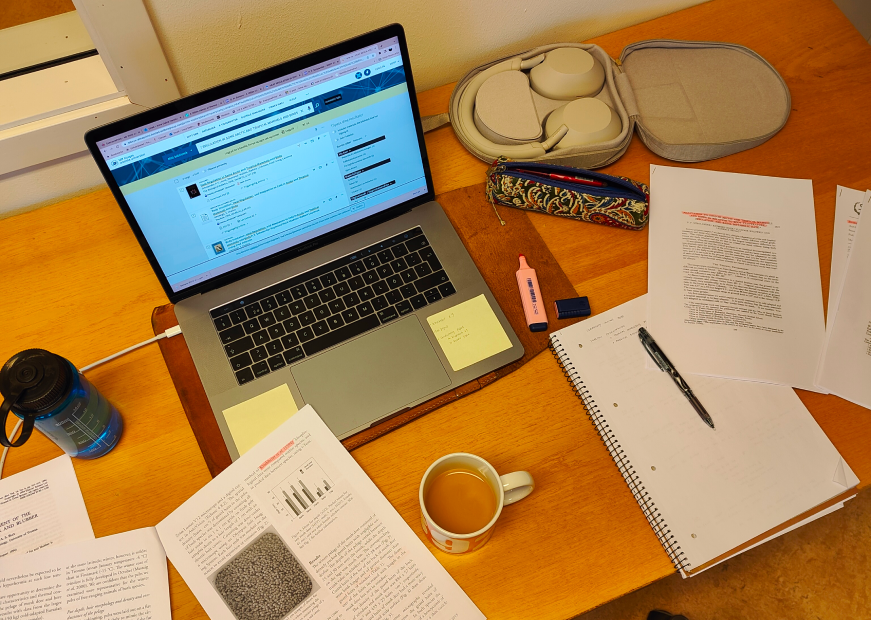
Once autumn arrived my many months of work were now exhibited as near-infinite lists of numbers on sheets and screens. All of it ready for me to analyse, understand and draw conclusions from to ultimately produce a thesis.
In the various stages of my study, a large portion of my effort was dedicated to counting lice from arctic foxes. It may not sound very glamorous, but it was just as important as the other parts because they are the first-ever numbers produced on the subject! So, what did we find? As expected, the number of lice on one fox can vary considerably. How this may relate to fur loss and degree of fur damage, however, is not as straightforward as we expected.
That foxes with more fur loss lose more heat goes without saying. To understand how much worse the fur of an infested fox is compared to a healthy fox, I needed to look into the numbers before I could make any concrete conclusions. This is where the subject of thermal properties enters, and things get a bit more complicated. There are many aspects to consider with these kinds of tests, plenty of which is pure physics! Luckily with the expertise of my professor Lars and the help of my boyfriend, who studied physics, I was able to successfully navigate this part of the work and any errors I may have encountered.
What did all the maths and physics tell me? I found that heat loss is due to a loss of fur rather than a change in the internal structure of the coat. I also found that things are not as simple as expected and having more lice doesn’t always mean less fur. As is common with science, my project answered one question and raised many more new ones. This was the first time a study of this kind has even been conducted as this is such a new issue, and more data over a longer period of time is needed to produce more certain conclusions. Monitoring will continue and scientists are keeping a close eye on the issue while testing new techniques to diagnose animals. It could turn out that after a couple of years the foxes learn to fight an infestation, and the issue becomes less important. Or, it could be that they will need a helping hand from us humans to do this. Only time will tell!
Once autumn arrived my many months of work were now exhibited as near-infinite lists of numbers on sheets and screens. All of it ready for me to analyse, understand and draw conclusions from to ultimately produce a thesis.
In the various stages of my study, a large portion of my effort was dedicated to counting lice from arctic foxes. It may not sound very glamorous, but it was just as important as the other parts because they are the first-ever numbers produced on the subject! So, what did we find? As expected, the number of lice on one fox can vary considerably. How this may relate to fur loss and degree of fur damage, however, is not as straightforward as we expected.
That foxes with more fur loss lose more heat goes without saying. To understand how much worse the fur of an infested fox is compared to a healthy fox, I needed to look into the numbers before I could make any concrete conclusions. This is where the subject of thermal properties enters, and things get a bit more complicated. There are many aspects to consider with these kinds of tests, plenty of which is pure physics! Luckily with the expertise of my professor Lars and the help of my boyfriend, who studied physics, I was able to successfully navigate this part of the work and any errors I may have encountered.
What did all the maths and physics tell me? I found that heat loss is due to a loss of fur rather than a change in the internal structure of the coat. I also found that things are not as simple as expected and having more lice doesn’t always mean less fur. As is common with science, my project answered one question and raised many more new ones. This was the first time a study of this kind has even been conducted as this is such a new issue, and more data over a longer period of time is needed to produce more certain conclusions. Monitoring will continue and scientists are keeping a close eye on the issue while testing new techniques to diagnose animals. It could turn out that after a couple of years the foxes learn to fight an infestation, and the issue becomes less important. Or, it could be that they will need a helping hand from us humans to do this. Only time will tell!
Posted In
Tags
Share


Read more
Sustainability
Reading Time 4 Minutes
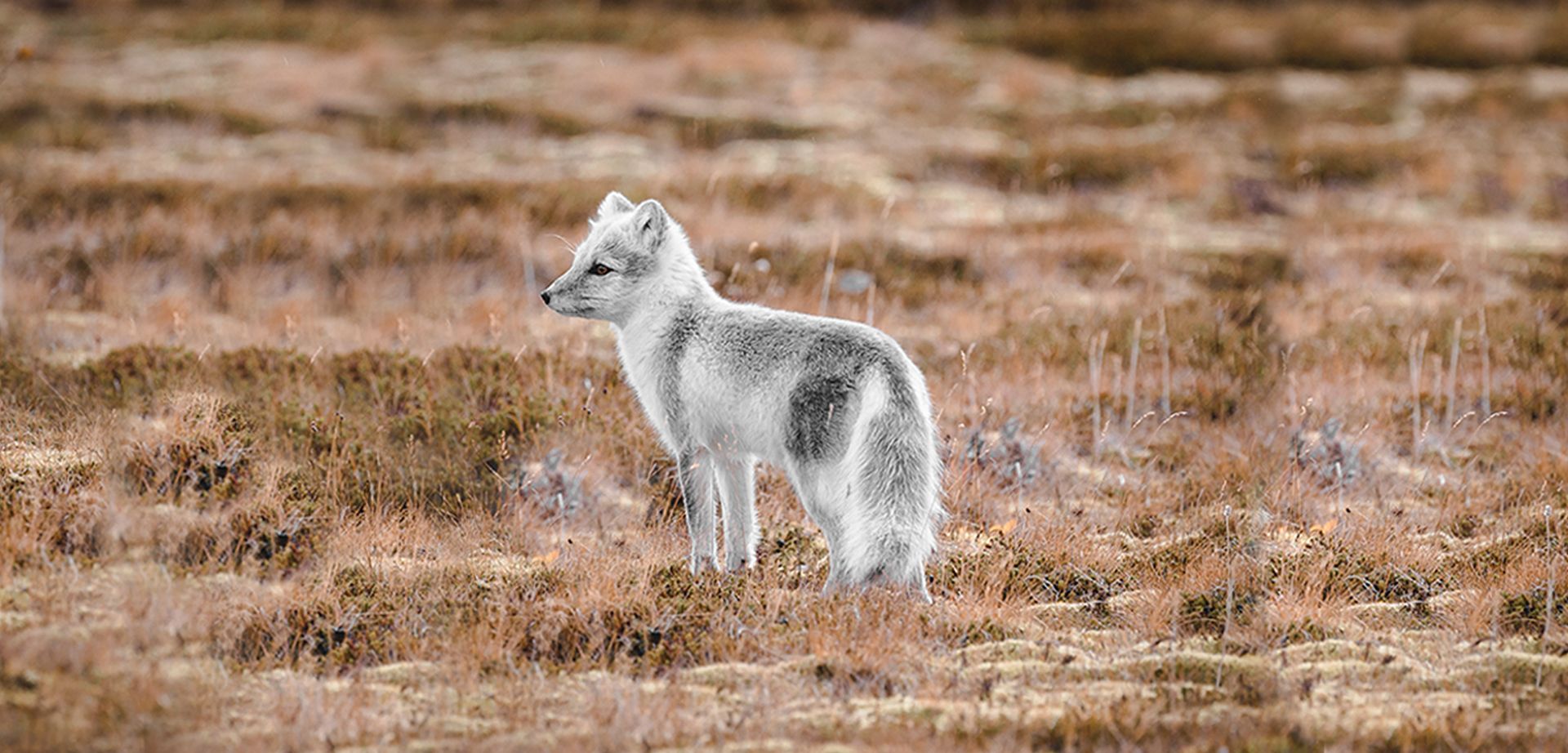
Hunted to near extinction, the arctic fox is making a comeback. But climate
change threatens to change that. Sponsored by the Arctic Fox Initiative, Ph.D.
student Vanessa Schreiber is researching the species’ survival strategies in
order to save it.
Read More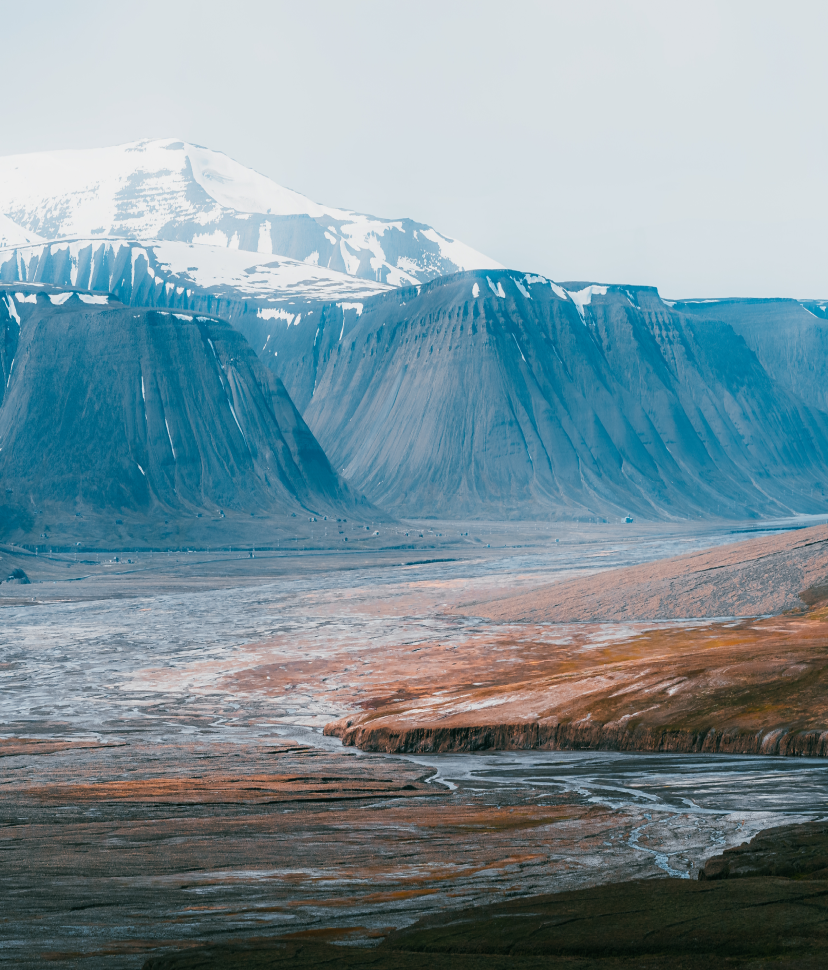
Nature
Reading Time 2 Minutes
Since she was a child, M.Sc Student Anna Henriksson always knew nature would play a big part in her life. Fast-forward to present day, and she’s studying the arctic fox in Svalbard, Norway. Read on as she explains what it’s like to prepare for this much-anticipated fieldwork.
Read More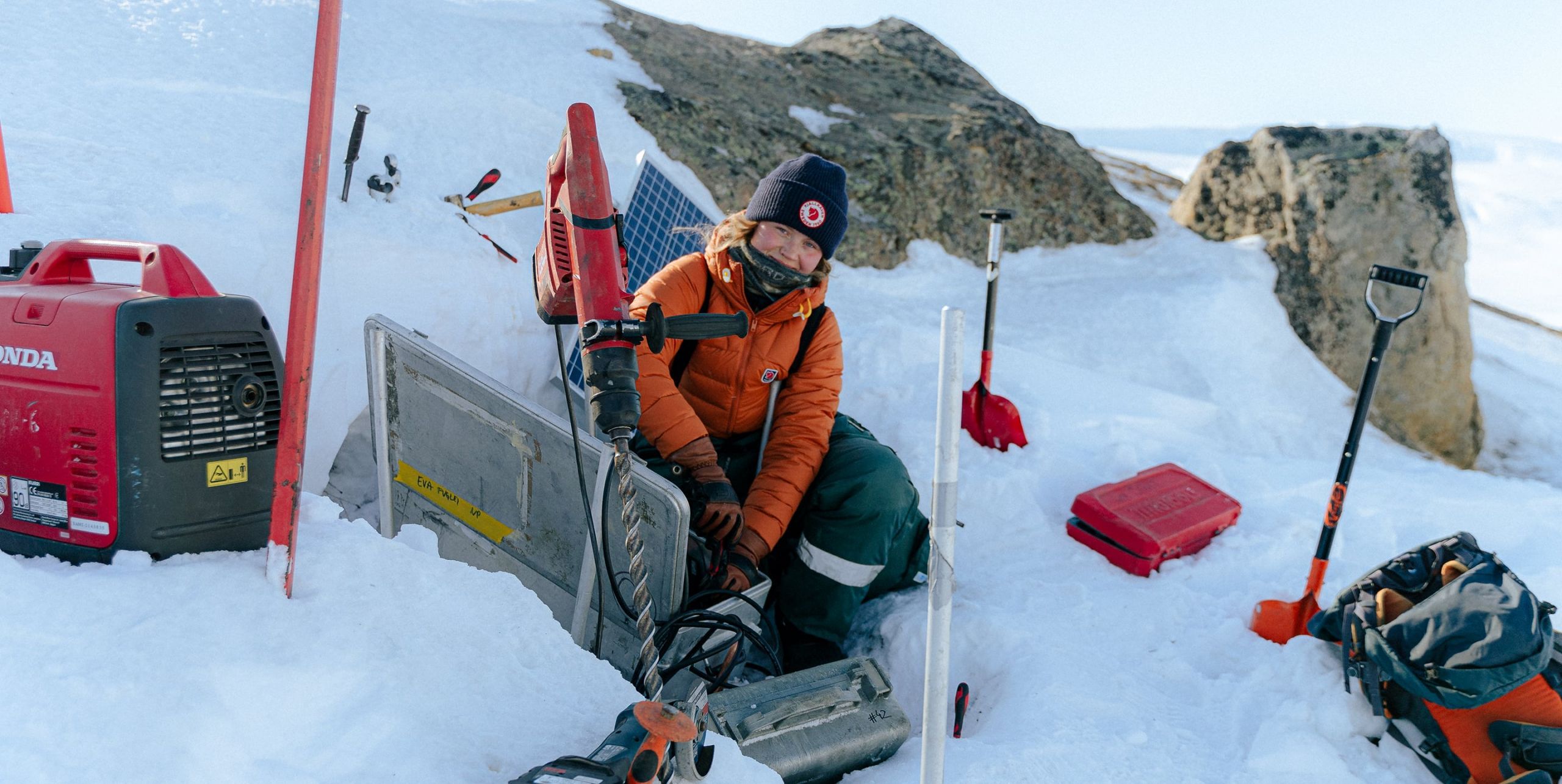
Nature
Reading Time 6 Minutes
Text: Anna Henriksson Photos: Private The first few days in Longyearbyen have
been intense but very educational. We’ve spent long days in the laboratory
carefully examining arctic foxes to check for lice and document any findings.
Although I’ve spent months and months deep diving into everything there is to
know about arctic foxes, there are still […]
Read More