


Tips
Reading Time 3 Minutes
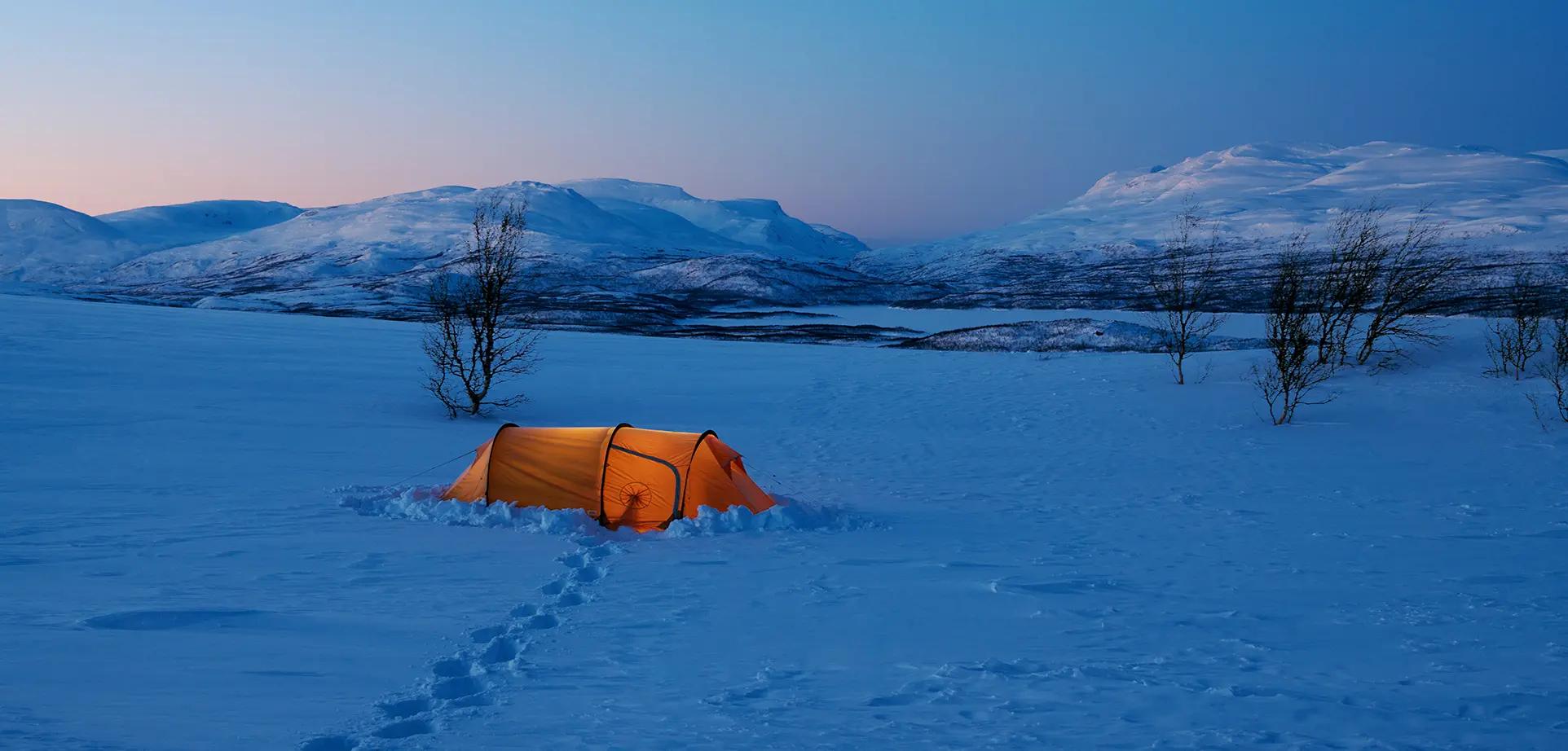
There are mixed feelings among outdoor people when it comes to sleeping in tents in the winter - some love it while others don’t.
Which one are you?
If you are one of those who have not quite decided yet, it may be good to know that with the right knowledge and a bit of practice, tenting in the snow is a fantastic experience.
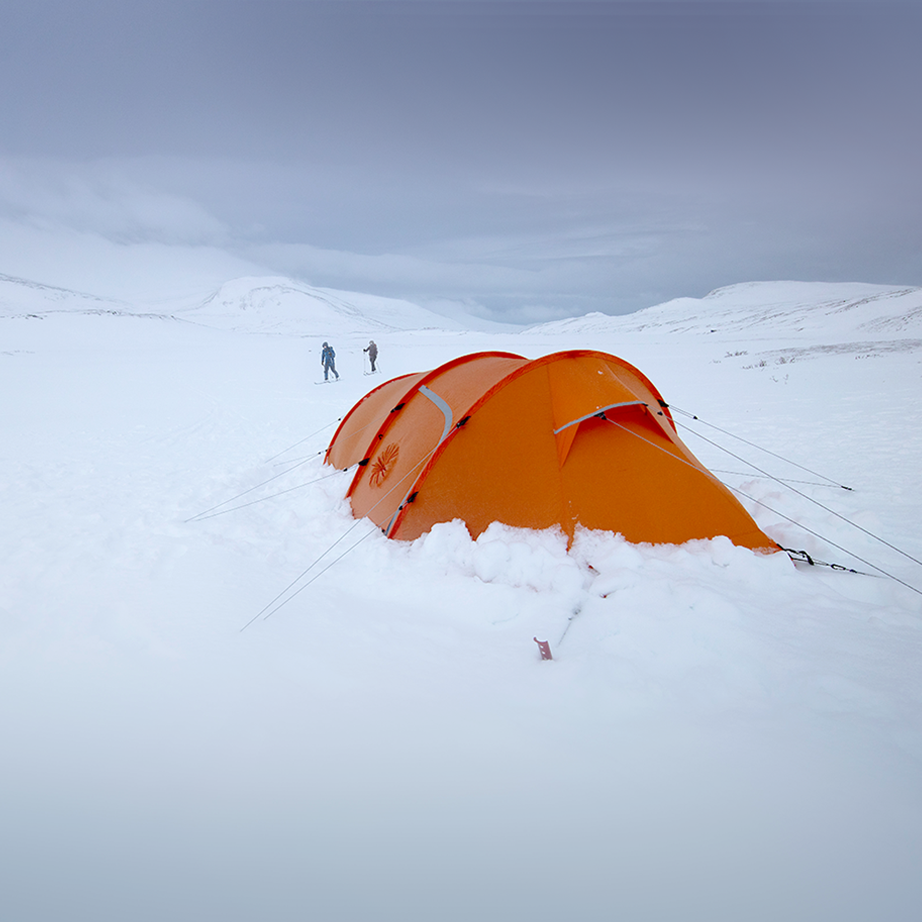
Choose a site sheltered from the wind with a snow depth that is sufficient to anchor the tent properly. Pack down the snow with skis or snowshoes and let it harden for about 15 minutes. Then pitch the tent as usual but use snow/sand pegs instead of regular pegs. Finally, place snow along the side of the tent facing the wind to prevent snow being blown up between the inner tent and flysheet.
Make sure you anchor all ground loops and guylines properly. Snow can be tricky so it is a good idea to use as many anchoring points as possible to distribute the stresses when the wind picks up.
A tent for winter use should have a spacious vestibule and inner tent.
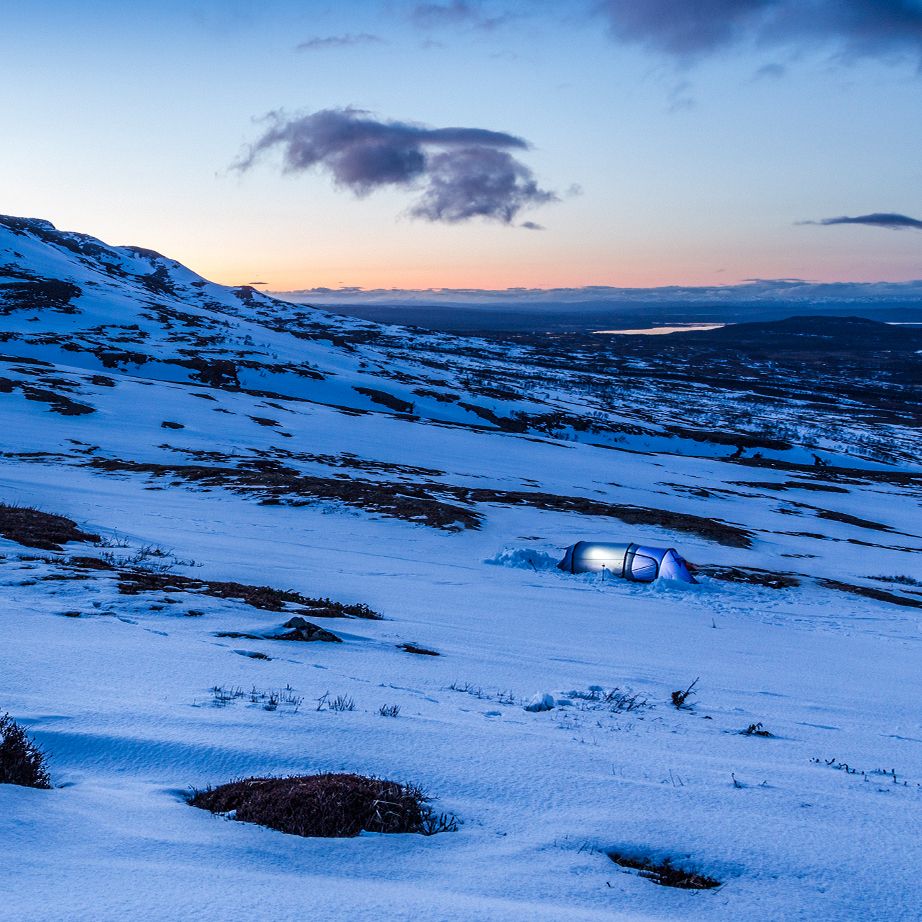
After the tent is in place, build a wind-blocking wall about a metre high shaped like an arrowhead with the point of the arrow pointing into the wind. This should be about three - five metres away from the tent. This will break strong winds and also block drifting snow so it won’t cover the tent.
When the tent is in place and the windbreak finished, dig a foot hole in the vestibule so you can comfortably sit at the edge of the inner tent with your feet in the vestibule. You can then crawl carefully into the inner tent onto a double layer of sleeping mats, lie down in your favourite sleeping position and shape the snow to ensure a comfortable night’s sleep.
Make sure you practice this in safe and secure conditions, close to home or a mountain cabin, before venturing out into the wilderness.
Tips
- In winter environments you will be travelling with more equipment that will take up more room. Therefore, a tent for winter use should have a spacious vestibule and inner tent. It is important that the ventilation system is designed to work from short end to short end and that you can close vents if snow is drifting. There is always the risk that parts of the dug-out vestibule can be filled with drifting snow so don’t leave loose equipment there. Close all backpacks and bags properly.
- For longer trips in the Scandinavian wilderness you should always use double sets of poles in the pole sleeves. This gives extra stability – the combination of precipitation and wind are the greatest threats when it comes to a tent collapsing.
- Avoid pitching your tent in steep ravines, at the base of steep snow-covered slopes or under cornices. Avalanches are much more dangerous than wind and drifting snow, so don’t be afraid to choose a higher position that is perhaps less sheltered and where snowdrifts might build up around the tent.
- Snow/sand pegs are used like regular tent pegs and can also be dug down horizontally as T-anchors. Stamp them into the snow and stamp down the area around them and let this freeze for 15 minutes before tightening the guylines.
- It is a good idea to use double sleeping mats in the winter, one in foam and one inflatable, with a pump. A self-inflating sleeping mat seldom inflates fully, especially in the winter.
Good luck camping!!
Posted In
Tags
Share


Read More
300km of Arctic wilderness, 180 skilled sled dogs, a handful of experts, and a small group of everyday people, just like you. Welcome, Arctic explorer to the adventure of a lifetime. Welcome to Fjällräven Polar.
Read More
Heritage
Reading Time 3 Minutes
In 1982, a woman named Gerd Dolva purchased a Fjällräven Räven Jacket. As part of the legendary Fjällräven family of jackets, it had a reputation among nature lovers for its ultra-functional and timeless design. Trends may come and go, but for 20 years, Gerd wore the jacket. Year after year, it stuck around. Gerd created many memories while wearing her Räven Jacket, and an emotional connection was forged.
Read More
Fjällräven Classic
Reading Time 7 Minutes
Putting unnecessary strain on your shoulders, back, and hips, a too-heavy backpack will distract you from what really matters on a multi-day trek: nature. Fjällräven Global Events Manager Carl Hård af Segerstad shares how weighing needs and wants can help you lighten the load.
Read More